Modular Workstations vs. Traditional Desks: Which Is Right for Your Office?
The choice between modular workstations and individual desks affects space, flexibility, cost and the way your team works. Here’s how the two actually compare.
If you’re setting up a new office or planning a refresh, one of the first decisions you’ll run into is a basic one: modular workstations, or traditional individual desks?
It sounds like a small choice, but it shapes almost everything that comes after it — how many people you can fit, how easily you can grow, and how much you’ll spend doing it again in two years.
What’s the Difference, Really?
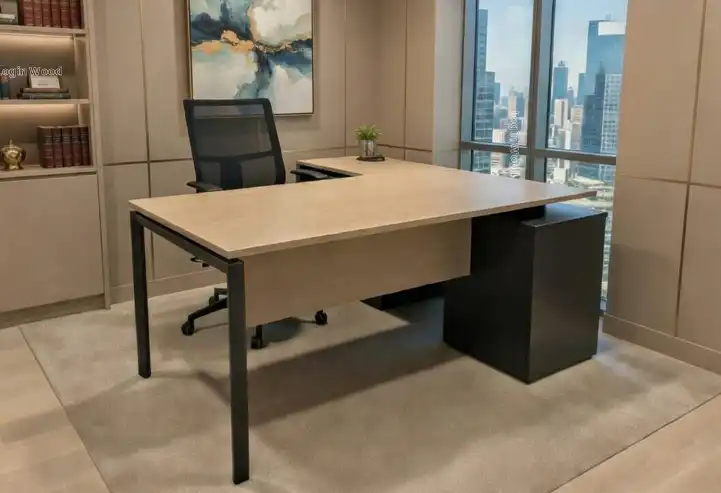
Traditional desks are standalone units — each one is its own piece of furniture, usually with a fixed size and a fixed spot. They’re familiar, simple to buy, and easy to picture.
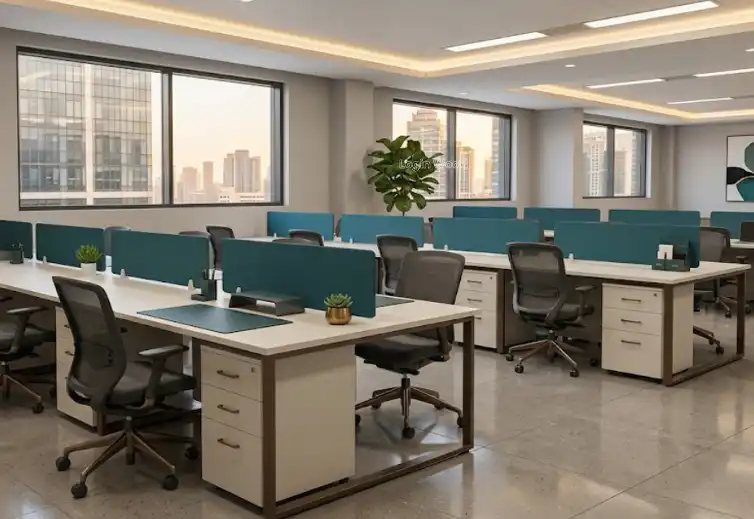
Modular workstations are built from a shared system of panels, desktops, and connectors that link together into clusters — benches of 2, 4, 6, or more seats sharing a footprint, often with built-in cable management and privacy screens between seats.
The difference isn’t just aesthetic. It’s structural — and that’s where the real trade-offs show up.
Space Efficiency
This is where modular systems usually win, and by a meaningful margin. Traditional desks each need their own clearance on every side, which adds up fast across a floor. Modular clusters share edges and walkways, so the same headcount typically fits into less square footage — which matters a lot in cities like Pune, where office rent is not getting cheaper.
If your floor plan is tight, or you’re trying to fit more people into an existing lease before committing to a bigger space, modular is usually the more space-efficient path.
Two systems. Very different ways of using space.
Modular Workstations
Built as a connected system for teams and changing layouts.
- Efficient use of floor area
- Easy to add or rearrange seats
- Shared structure and cable management
- Good fit for collaborative teams
Traditional Desks
Standalone furniture with greater separation between users.
- Simple standalone setup
- Easy to move individually
- More natural separation
- Useful for smaller, stable teams
Flexibility When Your Team Changes
Teams grow, shrink, and reorganize more often than most people plan for. This is the single biggest advantage of modular furniture: individual components can be added, removed, or rearranged without replacing the whole setup.
A cluster of 4 can become a cluster of 6. A team that moves to a new floor can take their configuration with them instead of starting over.
Traditional desks don’t offer that same flexibility. When headcount changes, you’re often buying new pieces or living with an awkward layout until the next furniture cycle.
Cost Over Time
Traditional desks can look cheaper upfront, especially for a small office. But the comparison changes once you factor in what happens after the initial purchase.
Every time your team reconfigures, traditional setups often mean new purchases. Modular systems are designed to be reconfigured using what you already own — which is where the long-term savings tend to show up.
“The cheapest setup on day one isn’t necessarily the least expensive setup over the life of an office.”
Think beyond the initial purchaseCollaboration vs. Privacy
Modular clusters are generally better for teams that collaborate often — shared desk surfaces and close proximity make quick conversations easier. Traditional desks, spaced further apart, naturally offer a bit more individual privacy and fewer distractions.
Neither is universally “better” here — it depends on how your team actually works day to day. Sales and support teams that talk constantly often prefer clusters. Roles that need deep, uninterrupted focus sometimes do better with more separation.
So Which One Should You Choose?
Choose modular workstations if…
- Your headcount is likely to change
- Your available space is limited
- Your teams collaborate closely
- You want furniture that can be reconfigured rather than replaced
Choose traditional desks if…
- Your team is small and stable
- Your space isn’t a constraint
- Your work is mostly independent
- Individual separation is more important to your workflow
Many offices actually land somewhere in between — modular clusters for open teams, with a few traditional desks or private cabins for roles that need more separation.
Built to match either way.
At LOGIN WOOD®, we manufacture both modular workstations and traditional desking, factory-direct from our own facility in Pune — so the decision comes down to what actually suits your team, not what’s easiest for us to supply. If you’re not sure which direction makes sense for your office, share your layout and headcount and we’ll help you work it out.